Fyodor Mikhailovich Dostoevsky (1821-1881) was a 19th century Russian novelist, short story writer, and essayist, known for his exploration of the human condition in novels like Crime and Punishment. Together with Tolstoy and Chekhov, he is generally regarded as one of the greatest Russian writers. The German-Swiss novelist Hermann Hesse especially praised Dostoevsky’s unequaled understanding of man’s psychological nature.
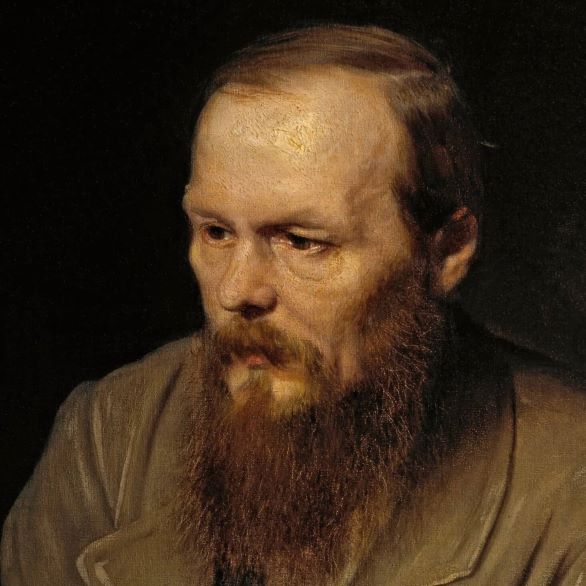
(Wikimedia Commons)
“Staring from afar into life, bereft and crippled by misery and no longer able to understand life in its wild, beautiful cruelty, wishing to have no more to do with it, then we are open to the music of this terrifying and magnificent writer. Then we are no longer onlookers, no longer epicures and judges; we are fellow creatures among all the poor devils of Dostoevsky’s creation, then we suffer their woes, and we stare fascinated and breathless with them into the hurly-burly of life, into the eternally grinding mill of death. But at the same time we can also catch Dostoevsky’s music, his comfort, his love, and then we can first experience the marvelous meaning of his terrifying and so often hellish world.”
Hermann Hesse, My Belief: Essays on Life and Art
Life and Works
Childhood
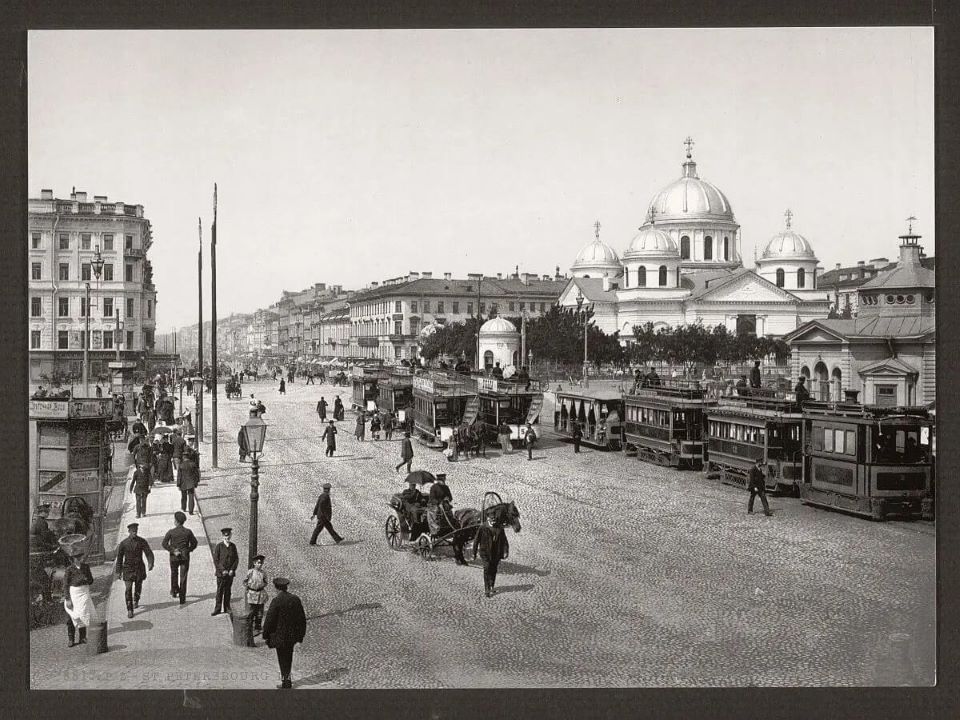
Fyodor Dostoevsky was born in 1821 in a well-to-do family in Moscow, where his father had position as a doctor in the Mariisnyk Hospital. Already from a young age, he was introduced to a wide variety of literature, with authors like Pushkin, Radcliffe, Schiller, Goethe, Cervantes, and Homer. Although his parents were strict, Dostoevsky purportedly said that it was their nightly readings that sparked his imagination and his obsession for literature. At the age of twelve, Dostoevsky was sent to a French boarding school, where he was said to be ‘a pale, introverted dreamer and an over-excitable romantic’. He was then forced by his parents to enroll in a military engineering academy in Saint Petersburg, which he loathed. While he did obtain the rank of engineer cadet and even took a position as a lieutenant engineer, he soon devoted most of his time to literary pursuits.
Early Career
Dostoevsky began his literary career in 1843 with a translation of Honoré de Balzac’s novel Eugénie Grandet, followed by several other translations, though these were no success. In dire need of money, partly due to his gambling addiction and his extravagant lifestyle, Dostoevsky wrote his first novel, Poor Folk. The popular literary critic Vissarion Belinsky described it as Russia’s first ‘social novel’. It quickly became a commercial success, gaining him entry into the Petrashevsky Circle, a literary circle which discussed Western philosophy and literature that was officially banned by the imperial regime of Tsar Nicholas I.
Siberian Exile
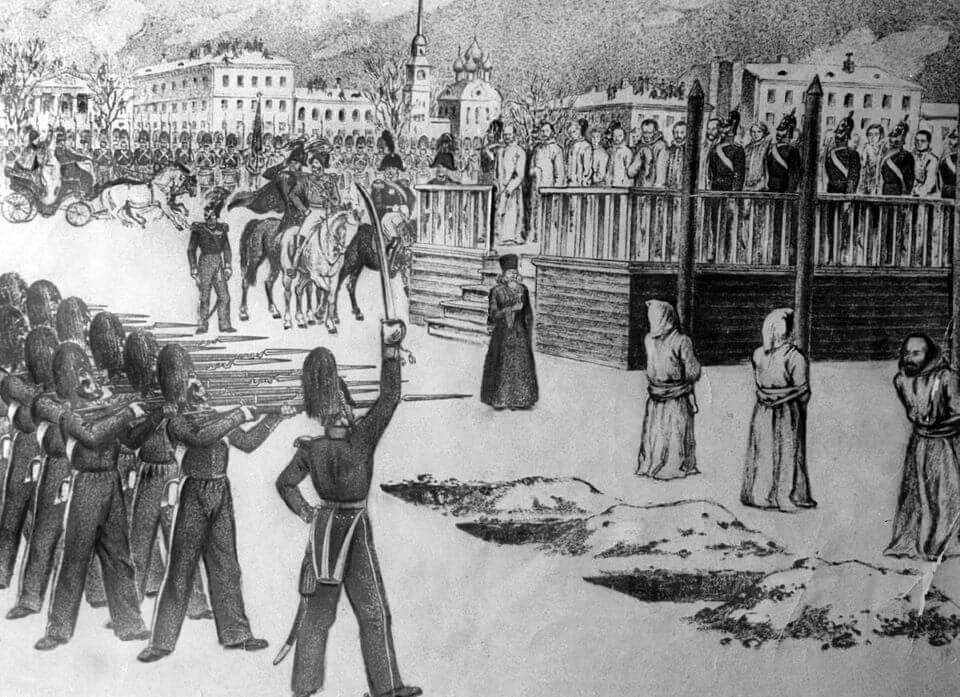
Since many members of the Petrashevsky Circle strongly opposed the autocratic reign by the tsar and even strove for radical social reforms, the group was soon suspected of treason. Dostoevsky himself was accused of reading banned works by Belinsky, for which he was sentenced to death by a firing squad. However, the execution was staged and, right before the command to fire, a letter a from the Tsar arrived which stated that their sentences were reduced and that they were not to be shot. Dostoevsky eventually served four years of exile in a katorga prison camp in Siberia, which he described as follows.
“In summer, intolerable closeness; in winter, unendurable cold. All the floors were rotten. Filth on the floors an inch thick; one could slip and fall. We were packed like herrings in a barrel. There was no room to turn around. From dusk to dawn it was impossible not to behave like pigs. Fleas, lice, and black beetles by the bushel.”

Dostoevsky was deeply affected by his imprisonment in Siberia. There, he developed his topical themes of freedom, faith, and suffering, which would permeate his later novels. In the years following his release, Dostoevsky wrote The House of the Dead, a novel based on his experiences in the Siberian prison camp, which was published in 1861. A couple of years later, in 1866, he would publish his first work of renown: Crime and Punishment.
Crime and Punishment
Background
At the time Dostoevsky began working on Crime and Punishment, he was heavily in debt. Not only did he owe a lot of money to creditors, but he also tried to help the family of his brother Mikhail, who had died in 1864. In order to raise funds, he appealed to the publisher Katkov to publish his story in the monthly journal The Russian Messenger, in which distinguished writers such as Turgenev and Tolstoy issued. Fortunately, he was allowed to publish his story. While working on the narrative , Dostoevsky more and more became intrigued with the story and its characters, until it developed into an actual novel. Eventually, he decided to drastically change the structure of the narrative and to shift from a third-person to a first-person perspective and. In order to achieve this, he had to rewrite large parts of his manuscript, as he states in a letter to his friend Wrangel in 1866.
“At the end of November much had been written and was ready; I burned it all; I can confess that now. I didn’t like it myself. A new form, a new plan excited me, and I started all over again.”
Dostoevsky was under great pressure to finish Crime and Punishment in time. In addition to meeting the deadlines for The Russian Messenger, he was simultaneously contracted to complete another work, The Gambler, which he wrote to pay off his gambling debt. Nonetheless, he succeeded to finish Crime and Punishment on schedule, with the first part being published in January 1866 and the last one in December of the same year.
Summary

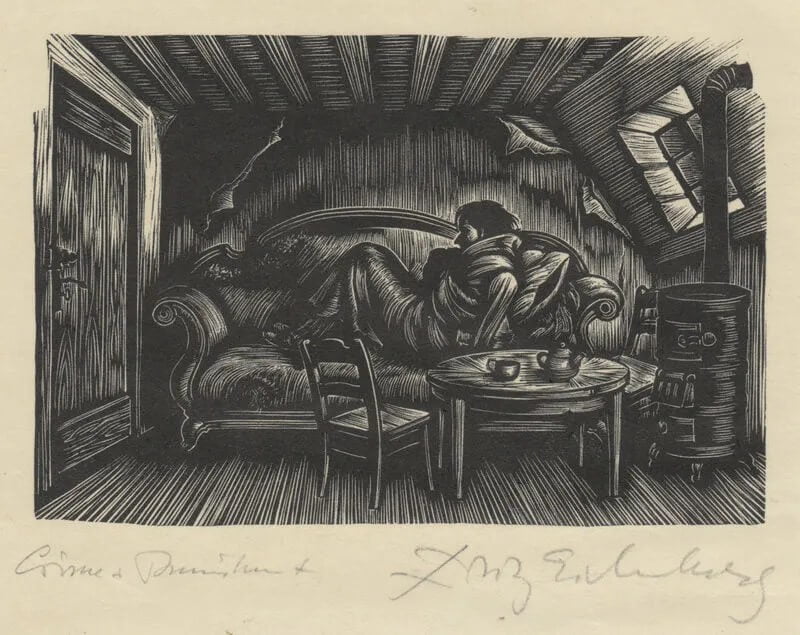
Rodion Raskolnikov, a former law student, lives in miserable conditions in a tiny, rented room in Saint Petersburg. He is isolated, antisocial, and no longer able to support himself. His mother sends him the little money she has, in the hope that he may one day get a proper position. Little does she know that he has long since abandoned his studies and that he wastes all his money on alcohol. He has little to no money to buy food for himself, let alone to pay his rent. In the depths of despair, and driven by an agonizing hunger, he conceives the idea of murdering and robbing an elderly pawnbroker. Though the first time he visits her, he is unable to execute his plan, even though he strongly detests her. Irritated, he tells her he will visit her another time, ensuring her he will bring her something valuable.
When he receives a letter from his mother about his sister, he is pushed over the edge. His sister Dunya, his mother writes, had decided to marry a wealthy but opportunist suitor, Luzhin, in order for the family to escape poverty. At this moment, Raskolnikov, disappointed by his own impotence to help his family or himself, experiences a nervous breakdown. He returns to the idea of murdering the elderly pawnbroker and is now fully committed to go through with it. Fully determined, he steals an axe, enters her apartment, and kills her by splitting her skull. When the victim’s sister stumbles into the scene of the crime, he kills her too. Shocked by his own actions and no longer able to think clearly, he only steals a handful of items. While he is almost caught red-handed, he just barely manages to escape and to conceal his stolen items.
After the crime, Raskolnikov becomes ill and falls into a feverish and delirious state. When he gets home, he succumbs to a deep and long sleep. Eventually he is visited by his friend Razumikhin, who would take care of him for the time being. Razumikhin notices that something is off with his friend, but he does not want to see it. The same counts for Raskolnikov himself, who repeatedly justifies his own cruel deed, unable to admit to himself that it was an act of wickedness and insanity.
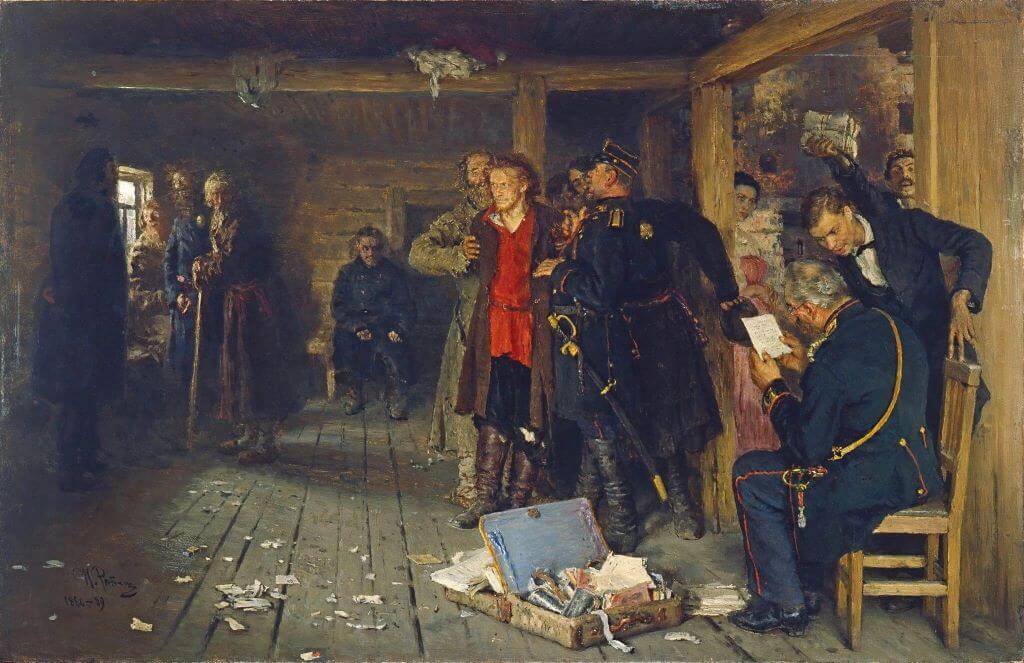
Though eventually, when the feeling of guilt and self-loathing got too heavy for Raskolnikov to bear, he confesses to a sympathetic woman, Sonya, what he has done. Urged by Sonya to turn himself in and terrified by agent Porfiry, who implies that he knows that he is the true perpetrator, Raskolnikov goes to the police station and confesses that it was he who murdered that elderly pawnbroker and her sister. He then is sentenced to eight years in a Siberian prison camp. While struggling to come to terms with what he has done, he from then on attempts to live a life free of fear and guilt-ridden feelings.
Themes
The major theme throughout the novel is inner conflict. Dostoevsky gives a unique insight into the human mind and its complexities through his account of Raskolnikov’s mental breakdown. The former student is unhappy with himself, unable to support himself or his family, but on the other hand he is arrogant to the point of narcissism. Or when he considers killing the pawnbroker, he is constantly in doubt. It seems like he is completely out of touch with his own thoughts and feelings, as if he does not believe what he is actually about to do. After he has actually done it, after he has actually murdered her, he loses all peace of mind, all clarity of thought, and all sense of reality. It is now that Raskolnikov’s madness is truly taking shape.
“Why am I going there now? Am I capable of that? Is that serious? It is not serious at all. It’s simply a fantasy to amuse myself; a plaything! Yes, maybe it is a plaything.”
When reflecting on what he has done, Raskolnikov alternates between feelings of exultation and absolute despair. On the one hand, he praises himself for his ‘unequalled’ cunning, but on the other hand he is afraid that he might get caught at any moment. One moment, he views himself as a Nietzschean Übermensch, comparing himself with figures like Napoleon, who do not obey the law but prescribe it; the next moment, he considers killing himself. It is this manic, bipolar nature that defines Raskolnikov most clearly.
“If he has a conscience he will suffer for his mistake; that will be punishment — as well as the prison.”
Other themes are poverty, isolation, and madness. It is likely that Raskolnikov’s poor living conditions and social isolation contributed to his madness. The fact that he is poor already marks him as an outsider, as someone not conforming to the norm. This no doubt encouraged Raskolnikov to think that he is different, special, and – paradoxically – superior to others. Furthermore, being poor makes it easier for Raskolnikov to justify murdering the elderly pawnbroker. Why would it be fair, he implies, that a great mind like himself has nothing to spend, while an uninteresting, uncultured, elderly pawnbroker has more money on her hands than she reasonably needs. All these arguments notwithstanding, the novel leaves us wondering what Raskolnikov went through before we get to know him in the book. What caused his madness and how could he become so detached from reality?
Conclusion
Reading Crime and Punishment was an incredibly satisfying experience. I was struck by its psychological depth, which sets it apart from many of the books I have read before. The novel explores the human condition in all aspects, examining human experience, emotion, aspiration, reason, conflict, love, and death. Is it difficult to put into words what it means to be human, to live between hope and fear, but this novel goes a long way.
“Where is it I’ve read that someone condemned to death says or think, an hour before his death, that if he had to live on some high rock, on such a narrow ledge that he’d only room to stand, and the ocean, everlasting darkness, everlasting solitude, everlasting tempest around him, if he had to remain standing on a square yard of space all his life, a thousand years, eternity, it were better to live so than to die at once! Only to live, to live and live! Life, whatever it may be!”