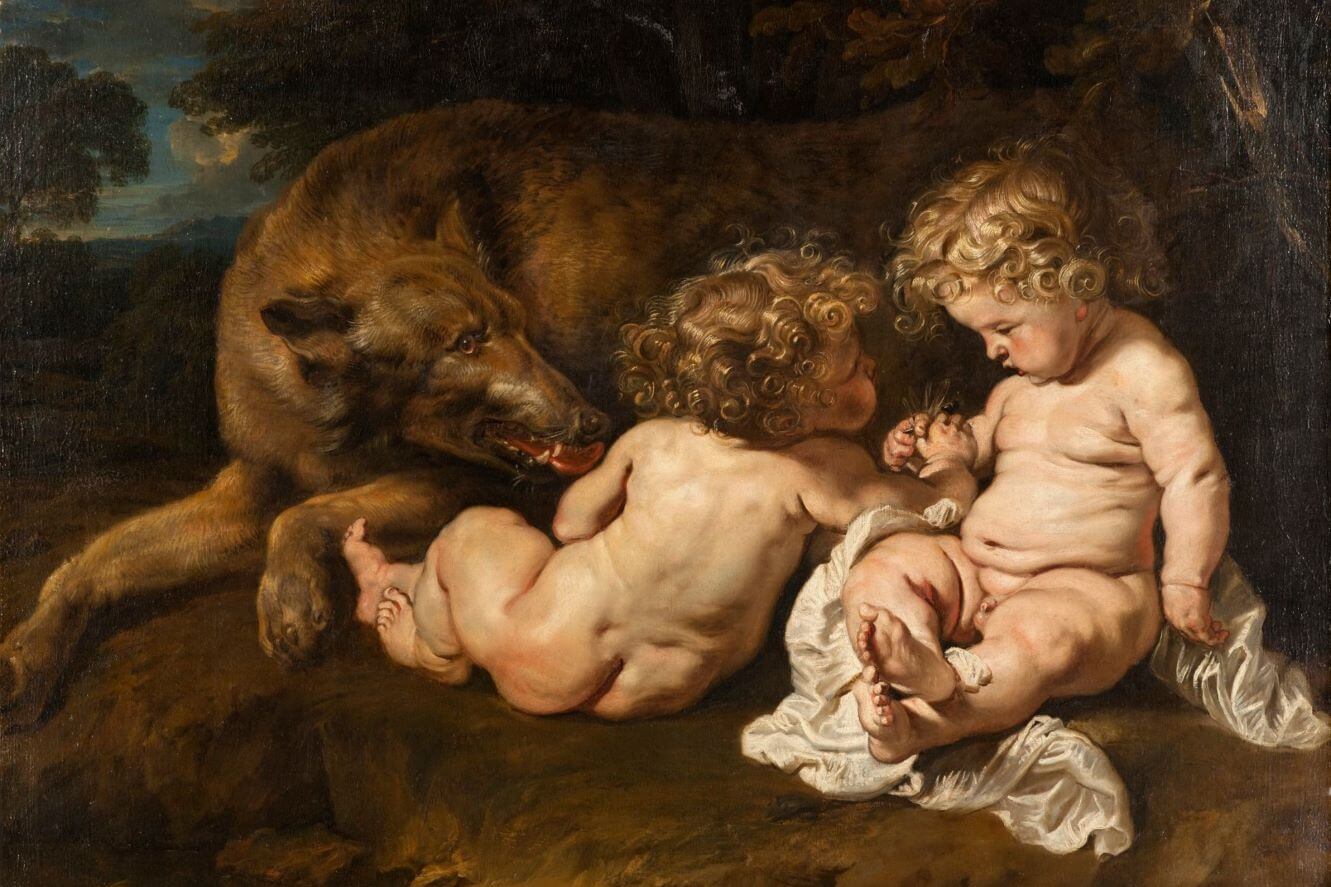
According to Roman mythology, Romulus and Remus were the legendary founders of Rome. The story of the twin brothers suckled by a she-wolf would become the city’s iconic foundation myth. It had to provide Rome with a legendary past, befitting the great empire that it was about to become. To accommodate for this, Romulus and Remus were said to be descendants of the Trojan prince Aeneas. Thus, writers like Livy and Vergil tried to legitimize Rome’s later glory (cf. Aeneid).
Parentage
The legendary founding of Rome can be traced back all the way to Aeneas. After the sack of Troy, the Trojan prince famously fled to Italy to find a new home. There he would found Lavinium and his son Ascanius would later found the city of Alba Longa. It is in this city that Romulus and Remus were born, as the sons of the vestal virgin Rhea Silvia, a distant descendant of Aeneas.
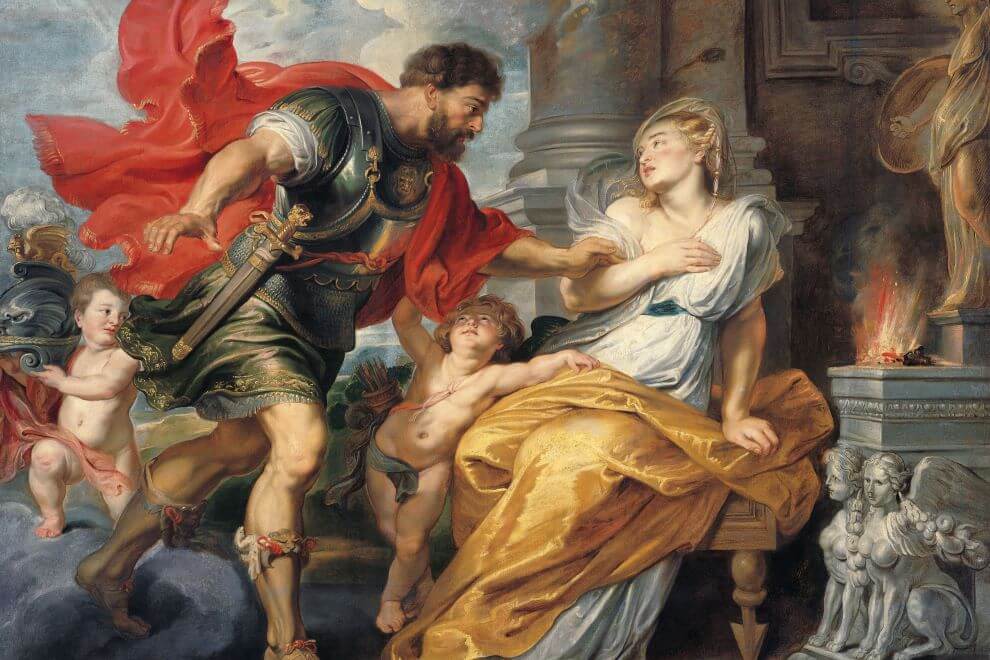
Rhea Silvia’s father, Numitor, had been the rightful ruler of Alba Longa, but he was removed from power and expelled by his brother Amulius. Fearing that Numitor’s daughter might give birth to possible heirs, Amulius appointed her as a priestess of Vesta. Fate willed otherwise, because it is said that Mars visited her in a sacred grove, after which she conceived the twin brothers. Amulius was terrified by this miraculous conception, so when the boys were born, he took them away and ordered them to be killed. But again, the gods seemed to favour Rome’s future founders.
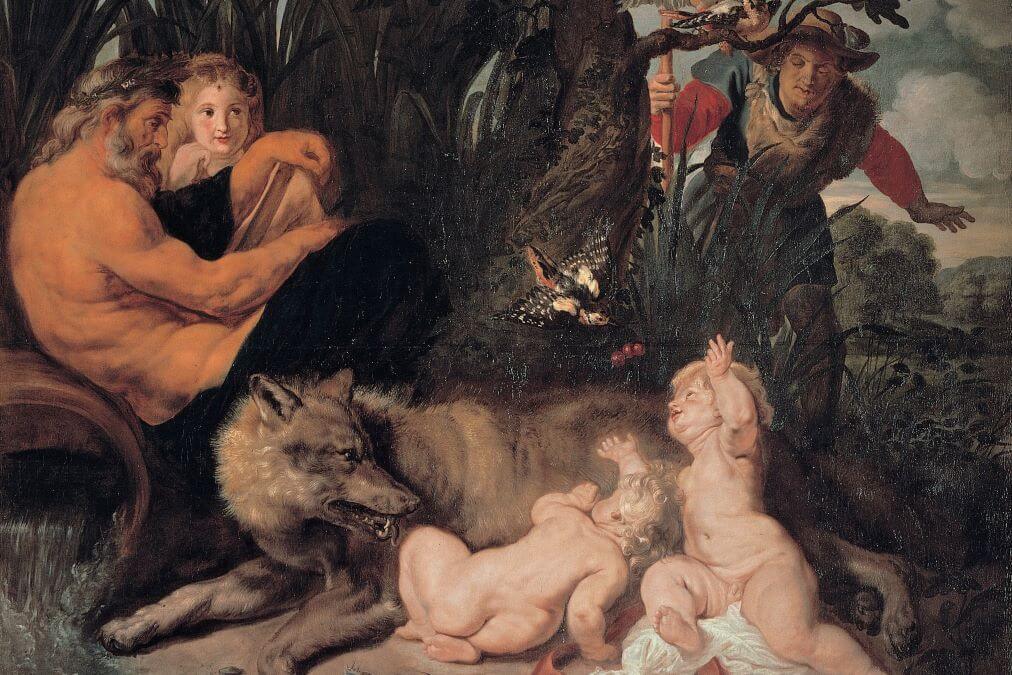
The servants ordered with killing the twins could not do the deed themselves, so instead they abandoned them on the bank of the Tiber, leaving them to drown. However, a she-wolf found the helpless twins and suckled them as if they were her own children. Eventually, they were found by a shepherd called Faustulus, who brought them up without knowing of their royal ancestry.
Upbringing
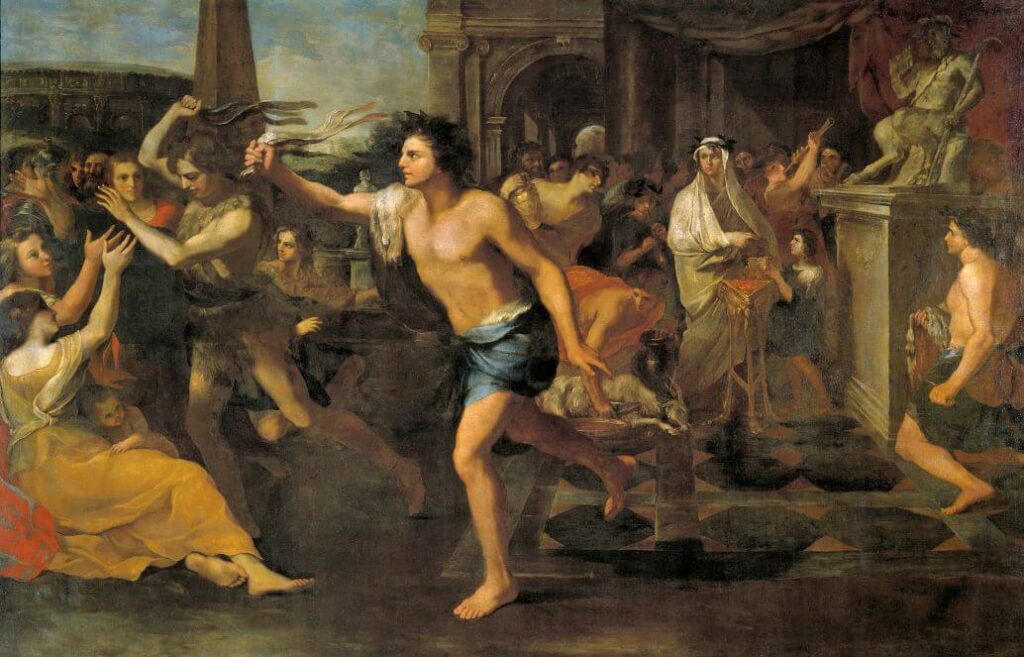
Romulus and Remnus had a simple upbringing, helping their father diligently with herding the sheep and spending their years in the fields and up the hills. Together with other young shepherds, the roamed freely through the woods, hunting wild animals and chasing brigands, distributing the spoils amongst themselves. One time however, during the festival of the Lupercalia, they were ambushed by a party of vengeful brigands, after which Remus was captured and taken to Amulius.
Romulus then raised a band of shepherds and proceeded to attack Numitor’s palace. By cunningly assaulting Amulius’ troops from multiple angles, they eventually won the battle, thus freeing Remus. Amulius was killed and Numitor was reinstated on the throne as king of Alba Longa.
Founding Rome
Because the population of Alba Longa had grown considerably, Numitor gave Romulus and Remus permission to found a new city of their own. The location was decided by means of augury, seeking omens by observing the movement of birds in the sky. Romulus chose the Palatine and Remus the Aventine as their station of observation. Remus was first to receive an omen: six vultures appeared to him. But Romulus saw no less than twelve birds. Both sides claimed to have received a favourable omen: Remus by precedence and Romulus by number. In the ensuing conflict, possibly after mocking his brother’s new walls, Remus was killed by Romulus.
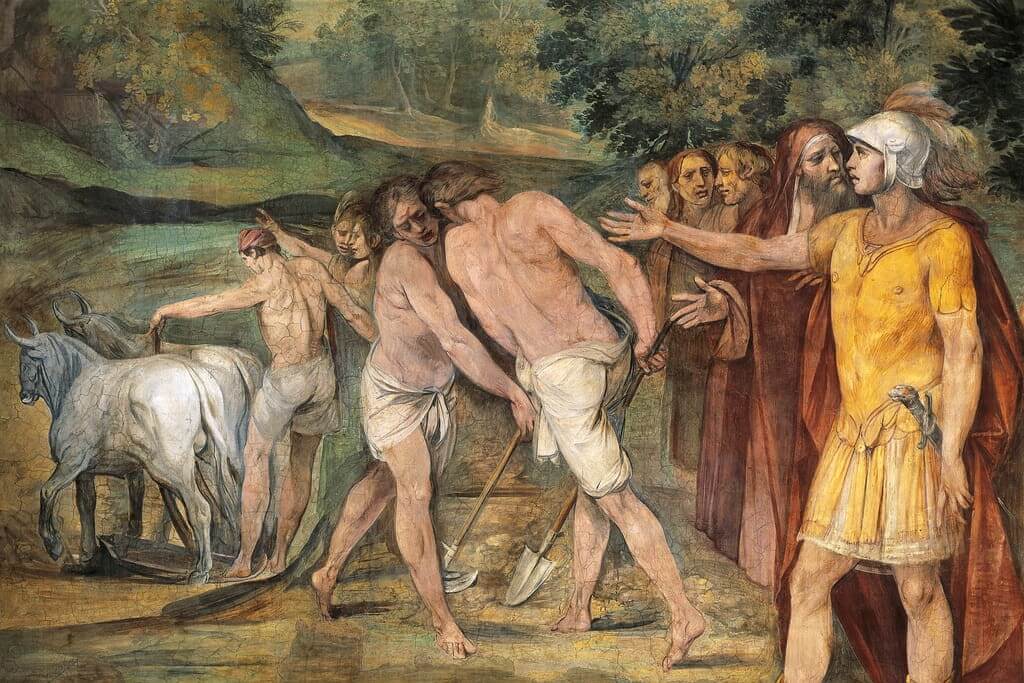
Romulus proceeded to build a city on the Palatine, Rome, famously named after himself. Thus he became the first king of Rome. Ruling for many years, he shaped Rome’s institutions, government, military, and religious institutions. However, one may question whether it bodes well that Rome’s founding myth is one of fratricide and bloodshed.
Further Reading
There are various versions of Rome’s foundation myth, so I have just chosen the version that is most common. The main sources, which I used in this article, are Dionysius of Halicarnassus’ Histories and Livy’s Ab Urbe Condita. The icon myth of the twin boys is also mentioned in Pltuarch’s Parallel Lives, Ovid’s Fasti, and Cassius Dio’ Roman History.